
NEW


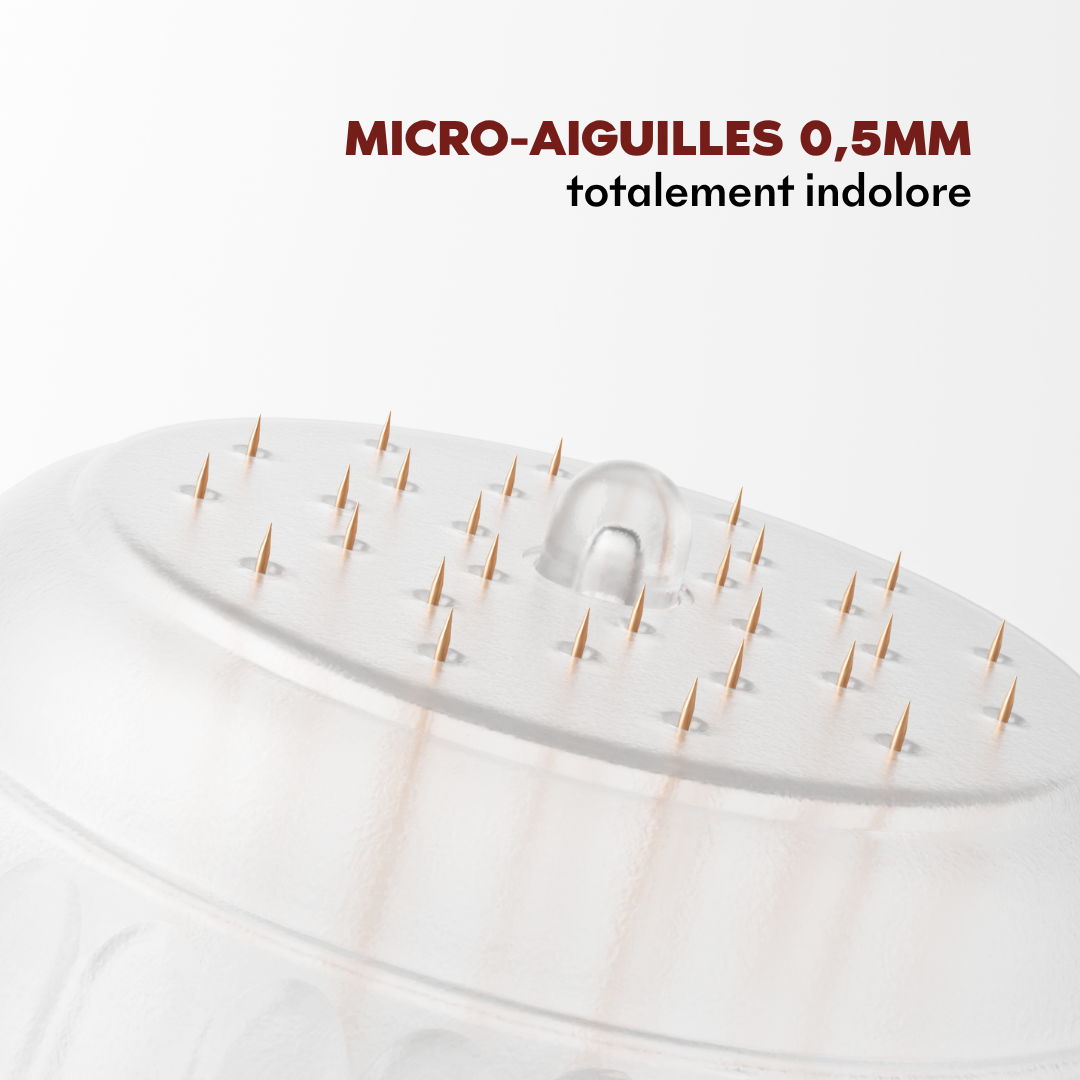


Anti-Hair Loss Micro-Infusion
An alternative to hair transplantation and Minoxidil
Patent filed
PRP at home
99% natural
The first patented French micro-infusion for hair
Visible results after 45 days
+164% hair growth
Maximum tolerance, no side effects, 99% natural
CE and RoHS compliant

Anti-Hair Loss Micro-Infusion
€149,90
-10%

Anti-Hair Loss Micro-Infusion Pack + DHT Blocker
€269,90
€243,00
-7%

Post-Hair Transplant/PRP Kit
€268,40
€249,90
Remaining stock
€149,90
■
Problem
For men and women suffering from androgenic alopecia - Baldness - Hormonal hair loss - Telogen effluvium - Seasonal hair loss - Post-hair transplant
■
Formulation
Patented TrichoActiv® Complex - 99% natural - Non-greasy
■
Dosage
The adjustable head controls the liquid flow; we recommend 2ml per use (refer to the bar on the side of the bottle).
HOW IT WORKS ?
STEP 1
STEP 2
STEP 3
CLINICAL RESULTS
+30 to +50%
penetration of assets
+ 167 %
thicker hair
+ 40%
hair density
x4
no more visible regrowth
+ 65 %
grows faster

YOUR RESULTS


EXPECTED RESULTS
1 MONTHS
3 MONTHS
6 MONTHS
9 MONTHS
1 YEARS
Stopping = resumption of the falling process
THE KEY: CONSISTENCY + PATIENCE + COMPLETE PROTOCOL = LASTING RESULTS
Number 1 Partner of Hair Transplant Clinics

Our Difference
FEATURES
HAIR MICRO-INFUSION PACK
MakeMyMask
MMM
OTHER RS KITS / SOLUTIONS
Developed by a Doctor of Pharmacy & certified trichologist
Made in France
Patented anti-hair loss serum included
Inspired by techniques used in clinical settings (PRP/mesotherapy)
Device tested and compliant (CE & RoHS)
Dermo-capillary expertise and genuine traceability
An alternative to uncontrolled drop shipping kits
Visible results from the first few weeks
INFOS

BENEFITS
ADVICE FROM DR.
FORMULATION
HOW TO USE IT?
CUSTOMER REVIEWS
THE ACTION PLAN


FAQ: Answers from Dr. Julie Pernet
How does the MakeMyMask Micro-Infusion Pack work?
What results can be expected from the Micro-Infusion Pack depending on the type of hair loss?
What is the recommended dosage of the MakeMyMask Micro-Infusion Pack?
Can the MakeMyMask Micro-Infusion Pack be used at the same time as another treatment?
Is the MakeMyMask Micro-Infusion Pack suitable for women (PCOS, postpartum, menopause)?
Is it effective against male pattern baldness (androgenic alopecia)?
Can the MakeMyMask Micro-Infusion Pack be used after a hair transplant?
Does the MakeMyMask Micro-Infusion Pack cause a rebound effect like Minoxidil?
Can it be used on textured, colored hair, sensitive scalp or fine hair?
Is microinfusion different from a classic serum?


